Skip to content

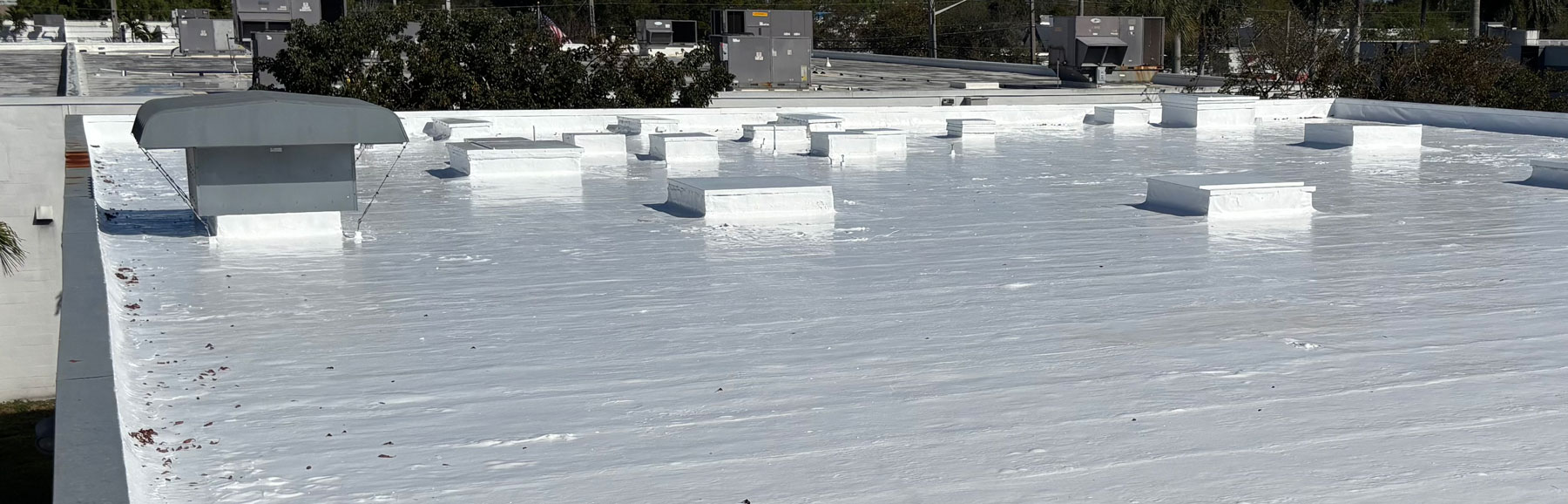
If you own a flat or low-slope roof in South Florida, someone has probably mentioned silicone coating to you. It usually comes up at the point where a roof is old enough to worry about but not obviously failing, and the choice looks binary: spend a lot on replacement, or spend less on a coating and hope.
It is not quite that simple in either direction. Here is what a silicone roof coating actually does, when it is the right call, and the one factor that decides whether it works.
What a Silicone Coating Actually Is
A silicone roof coating is a liquid-applied membrane that cures into a seamless, flexible layer bonded across the entire roof surface. It is not paint and it is not a patch. Once cured it forms a continuous barrier with no seams, which matters because seams are where flat roofs almost always start leaking.
It is also highly reflective. On a South Florida roof that is not a minor benefit, given the sun a flat roof absorbs from spring through autumn.
Why It Suits This Climate in Particular
South Florida asks a lot of a roof. Relentless sun, torrential rain and hurricane-force winds all in the same year is a demanding combination, and it is hard on the seams, flashings and laps of a conventional flat roofing system.
Silicone holds up unusually well to standing water, which is the specific weakness that rules out some other coating chemistries here. Flat roofs in this region pond after heavy rain, and a coating that degrades under sustained moisture is the wrong product for the location whatever its other merits.
When It Makes Sense, and When It Does Not
A coating is a good fit for a roof that is structurally sound and watertight but ageing, where the membrane is intact and the concern is UV degradation, minor cracking and general wear. In that situation a coating can add years of service life for considerably less disruption and cost than a tear-off.
It is the wrong answer for a roof with saturated insulation, a compromised deck, or widespread structural failure. Coating over a wet roof assembly seals the moisture in rather than keeping it out, and the problem continues underneath where nobody can see it. An honest inspection should tell you which of these you have, and it is the reason we start with a thorough inspection and assessment rather than a quote over the phone.
The Preparation Is the Job
This is the part that decides whether a coating lasts or peels, and it is where cheap coating jobs go wrong. A silicone coating is only ever as good as its adhesion to the surface underneath it.
Our process runs in a set order for that reason:
- Roof inspection and assessment. We evaluate the roof’s condition and determine the appropriate course of action before anything else happens.
- Repairs first. Existing damage such as cracks, leaks and deteriorated flashing has to be addressed before coating. Coating over a defect hides it; it does not fix it.
- Cleaning and preparation. We clean the roof thoroughly, removing debris, mold, mildew and any existing coatings, because proper preparation is what optimal adhesion depends on.
- Application. The coating goes on evenly for complete coverage and a seamless finish.
- Final inspection and quality assurance. A last check against our standards before the job is signed off.
If a contractor proposes to coat your roof without cleaning it first, that is the moment to get another quote.
Deal With Drainage Before You Coat
Flat roofs drain through internal roof drains and scuppers, and those clog. Debris, granules and organic growth collect at the low points, the drain slows, and water that should have left the roof in twenty minutes sits there for two days instead.
Silicone tolerates ponding better than most coatings, but no coating is a substitute for drainage that works. A blocked line is the same problem drain and sewer specialists in San Antonio, Texas clear at ground level, just relocated to the roof, and it is far cheaper to sort out before the coating goes down than after. Persistent ponding on a freshly coated roof means the underlying drainage was never addressed.
Watch the Penetrations
Ask any roofer where flat roofs leak and the answer is rarely the middle of the field. It is the penetrations: vent stacks, curbs, drains and anywhere something comes up through the membrane.
Plumbing vent stacks are among the most common of these, and the flashing around them deteriorates faster than the surrounding roof because it moves and weathers differently. If a stack itself is damaged or improperly sealed at the base, that is work for a plumbing contractor such as a plumbing team in Dallas-Fort Worth in their market, and it needs resolving before a coating is applied over the top of it. Detailing around penetrations is where a coating job is won or lost.
So Is It Worth It?
For the right roof, yes. A sound but ageing flat roof, properly prepared and correctly coated, gets a seamless reflective membrane, meaningful additional service life, and no tear-off. For a roof with structural or moisture problems underneath, a coating is money spent postponing a conversation you will have anyway.
The deciding factor is the inspection, not the product.
Find Out Which One You Have
We provide silicone roof coating services across Broward and Miami-Dade Counties, for homes, condos and commercial buildings alike. If your flat roof is getting old and you want a straight answer about whether coating is the right move, we will inspect it and tell you what we find.
Read more about our silicone roof coating services, or about roof cleaning in Broward County if organic growth is the more immediate concern.
Contact Super Kleen Pressure Cleaning for a free estimate.