Skip to content

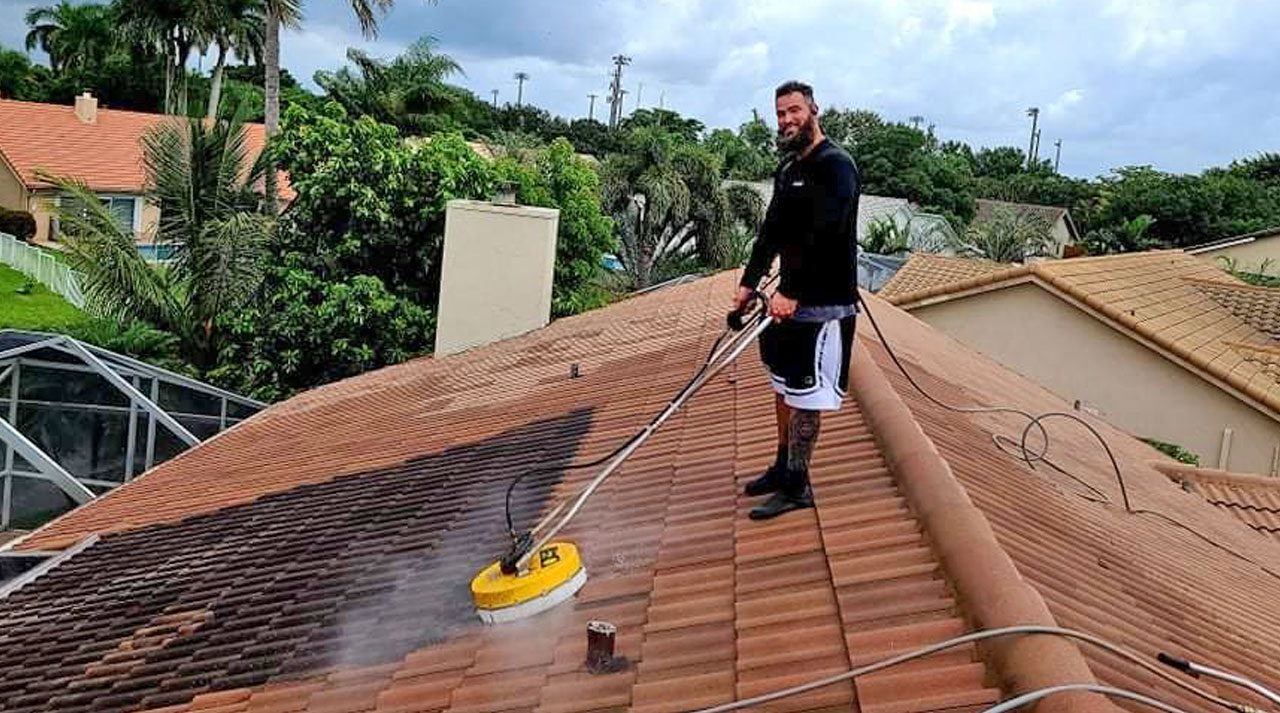
These two terms get used as though they mean the same thing. They do not, and the difference matters enough that choosing wrong can cost you a roof.
The Short Version
Pressure washing uses force. Water at high pressure physically removes what is on a surface. Soft washing uses chemistry. A cleaning solution does the work of killing organic growth, and water at low pressure simply rinses the dead material away.
One removes what sits on top. The other kills what is growing in.
Why That Distinction Matters in South Florida
Most of what dirties a property here is alive. Algae, mold, mildew and lichen are organisms with root structures that sit down in the pores of whatever they are growing on.
Blast that with high pressure and you remove the visible layer while leaving the roots. It looks clean for a few weeks, then it returns, because nothing was actually killed. Soft washing gets a longer-lasting result on organic growth precisely because the organism dies.
Where Soft Washing Is the Only Right Answer
Roofs, always. High-pressure water on a roof strips the protective granules off shingles, cracks tile, and drives water up under the roofing where it does not belong. For roofs we apply a biodegradable solution at low pressure, let it penetrate and kill the growth at the root, then rinse gently. It is safe across the materials common here – asphalt shingle, clay and concrete tile, metal and slate.
Wood. Timber decking, fencing and dock boards splinter under high pressure and lose their surface fibres, which leaves them rougher, more absorbent and quicker to regrow algae than before.
Painted and stucco surfaces, screens, and soft stone all fall in the same category.
Where Pressure Is Appropriate
Hard, durable, non-porous surfaces take pressure well: concrete driveways and sidewalks, concrete pool decks, most masonry and hardscape. Even then, the right pressure is the one matched to the surface rather than the maximum available. Concrete etches, and pavers lose the jointing sand that holds them in place.
In practice a lot of jobs are both. A house may need a soft wash on the roof and pressure on the driveway, on the same visit.
How to Tell What You Need
A rough rule: if the problem is growing – green, black, patchy, spreading – it is a soft wash question. If the problem is deposited – oil, tire marks, ground-in dirt on concrete – pressure is likely part of the answer.
When you are not sure, ask whoever quotes the job which method they intend to use and why. Anyone who says they will pressure wash your roof has told you something useful.
Two Things That Shorten Any Result
The first is shade. A surface that never dries fully will regrow organic growth quickly no matter how it was cleaned. Where tree canopy sits over a roof or a deck, trimming it back is genuinely part of the maintenance – the point a tree care company in Southern California makes about airflow and sunlight around structures applies just as directly here, in a much wetter climate.
The second is neglecting what cleaning exposes. Once a surface is clean, the condition of everything attached to it is visible – and after years under organic growth, exterior hardware, hinges and locks are often seized or corroded. It is the sort of small repair a locksmith in Dallas, Texas gets called for constantly, and it is easier addressed while everything else is being put right.
What We Do
We use the method the surface calls for, with biodegradable solutions, and we protect landscaping before anything is applied. That means soft washing where soft washing is correct and appropriate pressure where it is not.
See the full range of pressure cleaning services or read specifically about roof cleaning in Broward County. For a look at your property, contact Super Kleen Pressure Cleaning for a free estimate.